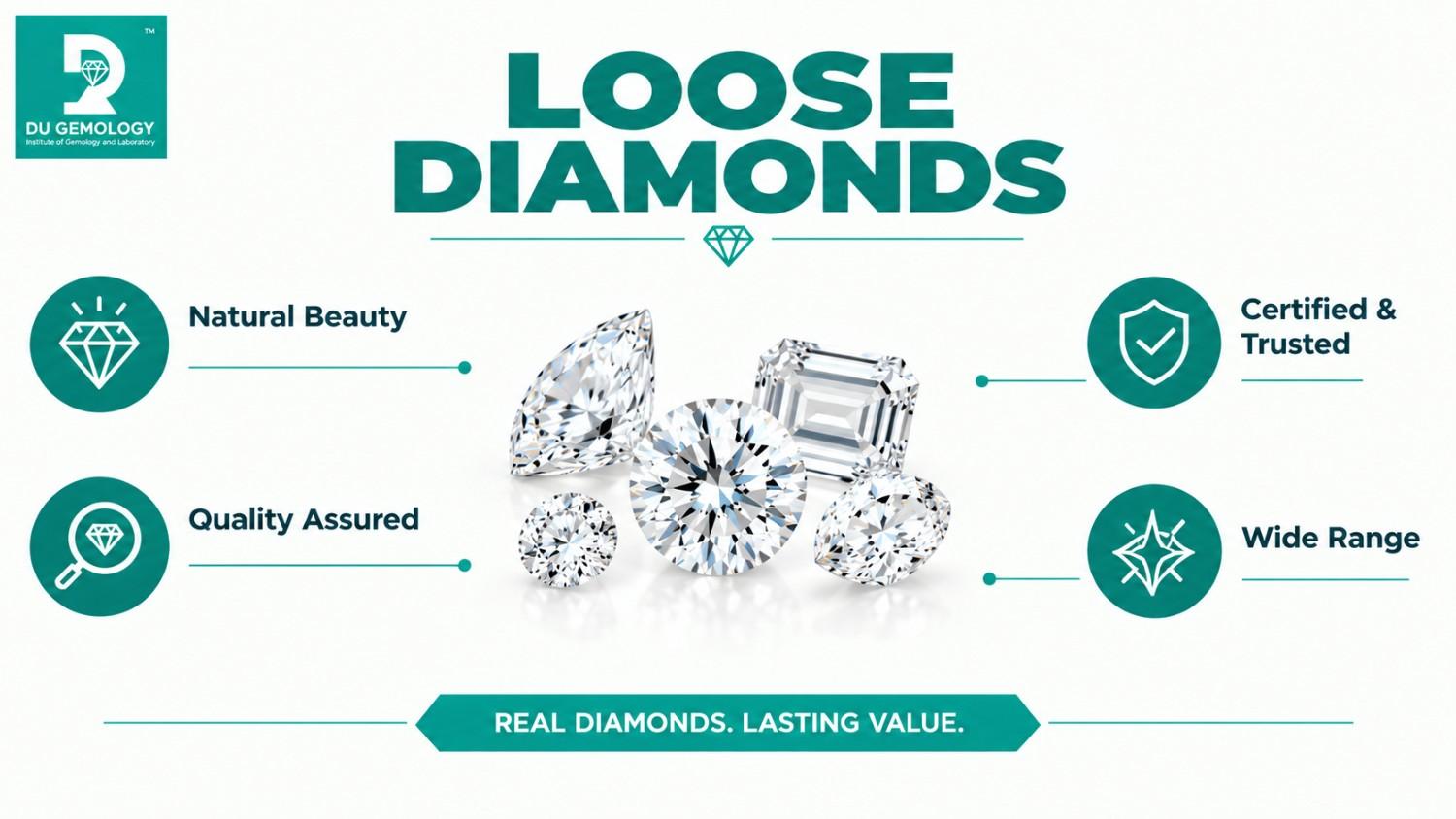
Loose diamonds are diamonds that are not set in jewellery. You can check their quality and choose a ring, necklace, or other design to match your style. Buying a loose diamond provides you more freedom to create jewellery the way you want after purchasing.
Table of Contents
What Does Loose Diamond Mean?
A loose diamond is a diamond that has not been set into jewellery. It can be natural or lab-grown. Many people buy loose diamonds when they want to create a custom ring or other jewellery.
Are Loose Diamonds Real Diamonds?
Yes, loose diamonds can be natural or lab-grown diamonds. Natural diamonds form deep inside the Earth, while lab-grown diamonds are made in laboratories. Both are real diamonds the only difference is they have different origins.
Loose Diamonds vs. Mounted Diamonds
| Feature | Loose Diamonds | Mounted Diamonds |
|---|---|---|
| Setting | Not set in jewellery | Already set in jewellery |
| Checking Quality | Easier to examine from different angles | The setting may make inspection harder |
| Design | You can choose your own design | The design is already fixed |
| Cost | Depends on the diamond | Includes the diamond and jewellery setting |
The main difference is that loose diamonds are not set in jewellery, while mounted diamonds are already set in a ring, necklace, or another piece.
Both options have their benefits. Loose diamonds are a good choice if you want to create your own design, while mounted diamonds are convenient if you prefer ready-made jewellery.
Types of Loose Diamonds
Loose diamonds are available in different types and shapes. You can choose a natural or lab-grown diamond and select a shape that suits your style and jewellery design.
Natural Loose Diamonds
Natural loose diamonds form deep inside the Earth over millions of years. They are mined, cut, and polished before being used in jewellery. Their price depends on their cut, colour, clarity, and carat.
Lab-Grown Loose Diamonds
Lab-grown loose diamonds are made in laboratories using special technology. They have the same basic properties as natural diamonds but are created differently. They usually cost less than natural diamonds of similar quality.
Popular Loose Diamond Shapes
- Round: A classic shape known for its sparkle.
- Oval: An elongated shape that can look larger than a round diamond of the same weight.
- Princess: A square shape with a modern look.
- Emerald: A rectangular shape with long, step-like facets.
- Pear: A teardrop shape with one pointed end.
- Cushion: A square or rectangular shape with rounded corners.
- Marquise: An elongated shape with pointed ends.
Understanding the 4Cs of Loose Diamonds
The 4Cs help you understand a diamond’s quality. They include cut, colour, clarity, and carat. Knowing these factors can help you compare diamonds and choose one that fits within your budget.
- Diamond Cut
Cut affects how a diamond reflects light and sparkles. A well cut diamond looks brighter and more attractive. Its proportions and finish also has a role in its appearance.
- Diamond Colour
Diamond colour refers to how much colour you can see in a diamond. The grading scale for most colourless diamonds are from D (colourless) to Z (light yellow or brown). Diamonds with less visible colour have higher grades.
- Diamond Clarity
Clarity refers to the marks inside a diamond or on its surface. These marks are called inclusions and blemishes. Diamonds with fewer or less noticeable marks usually have higher clarity grades.
- Diamond Carat
Carat measures a diamond’s weight, not its size. One carat equals 200 milligrams. Larger diamonds usually cost more, but overall their price also depends on cut, colour, and clarity.
How to Choose the Right Loose Diamond
Choosing a loose diamond becomes easier when you know your budget, preferred shape, and jewellery design.
Set Your Budget
Decide how much you want to spend on a loose diamond. This will help you find options that fit in your budget. Remember, the price depends on the diamond’s carat weight, cut, colour, clarity, and whether it is natural or lab-grown.
Choose a Diamond Shape
Loose diamonds come in different shapes, such as round, oval, princess, pear, and emerald. Each shape has its own design.
Decide Which of the 4Cs Matters Most
The 4Cs are cut, colour, clarity, and carat weight. Think about what matters most. If you want more sparkle, focus on the cut. If you want a larger diamond, compare different shapes and carat weights within your budget.
Choose Between Natural and Lab-Grown Diamonds
Natural diamonds form inside the Earth, while lab-grown diamonds are made in laboratories. Both are real diamonds, but their origins and prices are different. Lab-grown diamonds generally cost less than natural diamonds of similar quality.
Consider Your Jewellery Setting
Think about where you want to use the diamond. You may want it for a ring, necklace, pendant, or earrings. The jewellery design can affect which shape and size will work best.
Loose Diamond Prices: What Affects the Cost?
The price of a loose diamond depends on its weight, cut, colour, clarity, and origin. Understanding these factors will help you compare diamonds and choose one that fits your budget.
How Carat Weight Affects Diamond Price
Carat tells you how much a diamond weighs. Generally, larger diamonds cost more than smaller diamonds of similar quality. However, carat weight is not the only factor that affects the price. Two diamonds with the same weight can have very different prices because of their cut, colour, and clarity.
Natural vs. Lab-Grown Loose Diamond Prices
Natural diamonds form inside the Earth, while lab-grown diamonds are made in laboratories. Both are real diamonds, but they have different origins.
Lab-grown diamonds usually cost less than natural diamonds of similar quality. Your choice depends on your budget and personal preference.
Why Do Two Diamonds of the Same Carat Have Different Prices?
Two diamonds with the same carat weight can have different prices because of their quality and appearance.
- Cut: A well-cut diamond usually looks brighter and sparkles more.
- Colour: Diamonds with less visible colour may cost more.
- Clarity: Diamonds with fewer visible marks may have a higher price.
- Shape: The shape of a diamond can also affect its price.
- Origin: Natural and lab-grown diamonds usually have different prices.
This is why you should look beyond carat weight when comparing loose diamonds.
How to Compare Loose Diamond Prices
Before buying a loose diamond, compare a few important details to understand whether the price is right for you.
- Compare diamonds with similar carat weights and shapes.
- Check their cut, colour, and clarity grades.
- Review the grading reports and verify them through the issuing laboratory.
- Compare natural diamonds with natural diamonds and lab-grown diamonds with lab-grown diamonds.
- Ask the seller for clear details about the diamond and its price.
Taking these steps will help you compare your options and choose a loose diamond that suits your needs and budget.
How to Compare Loose Diamonds Before Buying
Before buying a loose diamond, compare a few options carefully. Check the grading report, clarity, cut, and overall appearance to find a diamond that fits with your needs and budget.
Check the Diamond Grading Report
Start by checking the diamond’s grading report. It provides details about the diamond’s carat weight, colour, clarity, and cut grade, where available. You can also verify the report number on the laboratory’s official website to check whether the details match.
Examine Clarity Characteristics
Diamonds can have small marks inside or on their surface. These are called inclusions and blemishes. Check whether these marks are easy to notice and affect how the diamond looks. If you are unsure, ask a qualified gemologist to examine the diamond.
Compare Diamonds Under Different Lighting
A diamond can look different under different lighting conditions. Compare it under normal indoor light and bright light. Notice how much sparkle and brightness you can see. Do not judge a diamond only by how it looks under bright showroom lights.
Check Cut Quality and Overall Appearance
A diamond’s cut affects how it reflects light and sparkles. A well-cut diamond usually looks brighter. Check its proportions, symmetry, and finish. Comparing diamonds of similar carat weight can help you understand the differences and choose the one you like most.
How to Identify and Test Loose Diamonds
It is not always easy to say whether a loose diamond is real just by looking at it. Some other stones can look very similar to diamonds. Professional testing can help identify the stone and provide more reliable information about it.
How Professional Diamond Testing Works
A gemologist uses special instruments to examine a diamond. These tests help identify the stone by checking its properties. If required, additional tests can help determine whether the diamond is natural or lab-grown.
Why Expert Examination Matters
A professional examination helps you avoid confusing a real diamond with a similar-looking stone. A qualified gemologist can check the stone using suitable testing methods and explain its characteristics. If you plan to buy or sell a loose diamond, professional testing can help you make a more informed decision.
Where to Buy Loose Diamonds in India
You can buy loose diamonds in India from diamond dealers, jewellery shops, or online sellers. Before buying, check the diamond’s quality, price, and grading report. Also, make sure you are buying from a seller you can trust.
Buying from a Trusted Diamond Dealer
Buying from a trusted diamond dealer lets you see the diamond in person and ask questions about it. Choose a seller who clearly explains the diamond’s quality, origin, and price. Ask for a grading report and check its details before making a purchase.
Buying Loose Diamonds Online
Buying loose diamonds online gives you more options to compare shapes, sizes, and prices. However, you may not be able to see the diamond in person before buying. Choose a seller who provides clear images, grading reports, and complete price details. Check customer reviews and the return policy before placing your order.
What to Check Before Making a Purchase
Before buying a loose diamond, keep these points in mind:
- Grading report: Check the diamond’s details and verify the report number.
- Diamond origin: Confirm whether it is natural or lab-grown.
- Price: Compare similar diamonds before deciding.
- Seller’s reputation: Check customer reviews and business details.
- Return policy: Read the terms carefully before buying.
- Professional testing: If you have doubts, get the diamond checked by a qualified gemologist.
Taking these simple steps can help you choose a loose diamond that suits your needs and budget.
How to Care for Loose Diamonds
Taking care of loose diamonds is important to keep them clean and safe. Whether you plan to use a diamond in jewellery or keep it for later, a few simple steps can help protect it.
- Safe Cleaning Methods
You can clean a loose diamond with lukewarm water, a few drops of mild dish soap, and a soft brush. Rinse it gently over a bowl of water and dry it with a soft cloth. Avoid harsh chemicals and rough brushes, as they may damage the diamond or affect its appearance.
- Secure Storage
Keep loose diamonds in separate, labelled boxes or soft pouches. This helps prevent them from scratching other stones and makes them easier to identify. Store them in a safe place where they cannot be easily lost.
Professional Inspection Before Setting
Before setting a loose diamond in a ring, necklace, or other jewellery, have it checked by a qualified jeweller or gemologist. They can look for any visible damage and help you choose a suitable setting. This helps keep the diamond secure and reduces the risk of damage or loss.
Frequently Asked Questions About Loose Diamonds
Q1. Are Loose Diamonds Cheaper Than Mounted Diamonds?
Ans:- Not always. The total cost depends on the diamond, jewellery design, metal, and making charges.
Q2. How Much Does a 1-Carat Loose Diamond Cost?
Ans:- The price depends on its cut, colour, clarity, and origin. Natural diamonds usually cost more than similar lab-grown diamonds.
Q3. Are Lab-Grown Loose Diamonds Real Diamonds?
Ans:- Yes, they are real diamonds with the same basic properties as natural diamonds but a different origin.
Q4. Is It Safe to Buy Loose Diamonds Online?
Ans:- Yes, if you choose a trusted seller and check the grading report, customer reviews, and return policy.
Q5. Which Diamond Shape Looks the Biggest?
Ans:- Oval, marquise, and pear shapes can look larger than round diamonds of the same carat weight.
Q6. Should You Choose Diamond Clarity or Carat Size?
Ans:- Choose based on your priorities. Carat affects weight, while clarity describes the diamond’s internal and surface marks.
Q7. Can You Buy a Loose Diamond for a Custom Ring?
Ans:- Yes, you can choose a loose diamond and pair it with a setting that matches your style and budget.
Q8. Do Loose Diamonds Have Resale Value?
Ans:- Yes, but the resale price may be lower than the purchase price and depends on quality, origin, and market demand.
Conclusion
Choosing the right loose diamonds becomes easier when you know what to look for. Compare the 4Cs, check the grading report, and choose between natural and lab-grown diamonds based on your budget. If you are unsure about a diamond, get it checked by a qualified gemologist.