
If you are buying, selling, valuing, or simply trying to verify a diamond, a diamond testing lab in Delhi can help you understand what exactly you have. Professional testing can determine whether a diamond is natural, lab-grown, or a simulant. A laboratory may examine factors such as color, clarity, carat weight, fluorescence, treatments, and other identifying features using specialized gemological instruments.
Table of Contents
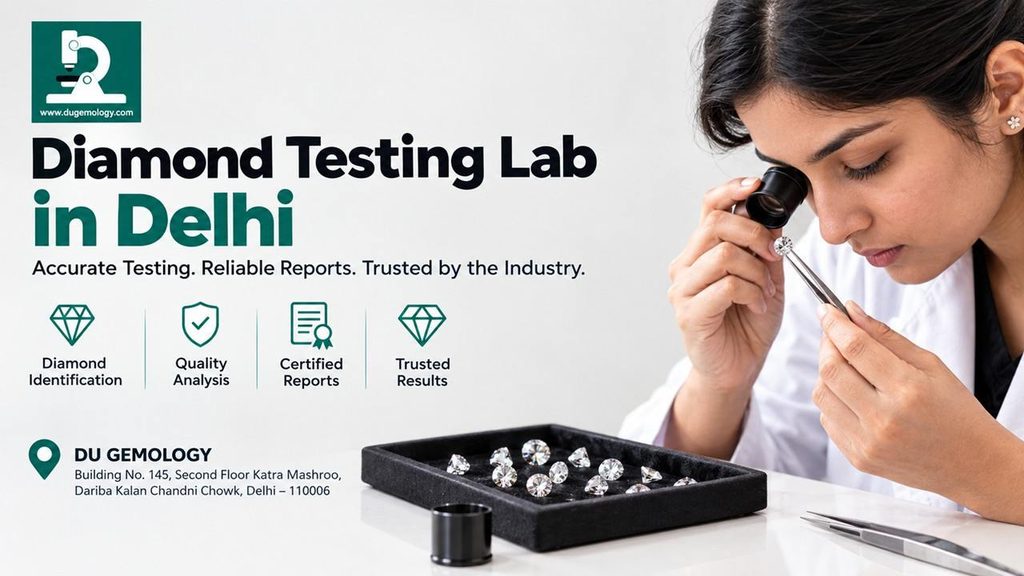
While a diamond may look genuine to the eye, visual inspection alone cannot always reveal its certain treatments. This is why professional laboratory testing can provide confidence before making an important decision. In this guide, you will learn what a diamond testing lab checks, how the testing process works, what instruments may be used, and when professional diamond testing is recommended or required.
What Is Diamond Testing?
Diamond testing is the process of examining a diamond to determine what it is, whether it is natural, lab-grown, or a simulant, and what characteristics it has. Professional testing uses specialized gemological instruments to examine properties such as color, clarity, carat weight, fluorescence, optical characteristics, and other identifying features.
What Can a Diamond Testing Lab in Delhi Identify?
A professional diamond testing lab in Delhi can examine a diamond using specialized gemological equipment. Depending on the type of testing, a laboratory may help identify:
- Natural diamonds – Whether the stone is naturally formed.
- Lab-grown diamonds – Whether the diamond was created in a laboratory.
- Diamond simulants – Stones such as moissanite or cubic zirconia that can look similar to diamond.
- Treatments – Certain treatments or enhancements that may affect the diamond’s appearance or value.
- Diamond characteristics – Features such as colour, clarity, fluorescence, inclusions, and other identifying properties.
- Carat weight – The actual weight of the diamond.
- Cut and proportions – Where applicable, the proportions and other cut-related characteristics.
- Potential identification features – Internal or external features that can help distinguish one diamond from another.
Natural Diamonds
A professional laboratory can examine a diamond to determine whether the material is naturally formed and study its identifying characteristics. This may include examining inclusions, growth features, colour, fluorescence, and other gemological properties.
Lab-Grown Diamonds
Lab-grown diamonds have essentially the same chemical composition as natural diamonds, so identifying their origin may require specialized testing. Two common growth methods are CVD (Chemical Vapor Deposition) and HPHT (High Pressure High Temperature). A professional laboratory can examine specific growth features and other characteristics to help identify between natural diamonds from lab-grown diamonds.
Diamond Simulants
Diamond simulants are different materials that can look similar to diamonds but are not diamonds. Common examples include:
- Moissanite
- Cubic Zirconia (CZ)
Proper testing can help distinguish these materials from diamonds.
Treated Diamonds
Some diamonds may undergo treatments to improve their color, clarity, or appearance. Certain treatments can affect how a diamond is identified and may also influence its value. Laboratory examination may be needed to identify treatments that are not easily detected through visual inspection.
How Is a Diamond Tested in a Laboratory?
Diamond testing in a professional laboratory follows a systematic process. The exact tests used depend on the diamond and the question being investigated.
Step 1: Initial Examination
The diamond is first examined under suitable lighting and magnification. The examiner looks at its general appearance, colour, transparency, inclusions, and other visible features.
Step 2: Weight and Measurements
The diamond is carefully weighed to determine its carat weight. Its dimensions may also be measured to record its size and proportions.
Step 3: Microscopic Examination
A microscope may be used to study inclusions, growth features, surface characteristics, and other details that can help with identification.
Step 4: Optical/Physical Testing
Appropriate gemological instruments are used to examine properties that help confirm whether the stone is diamond and provide further information about its characteristics.
Step 5: Advanced Testing Where Required
If the identification is more difficult, additional methods may be used. These can include spectroscopy, photoluminescence (PL) analysis, advanced microscopy, and other specialized techniques. The choice depends on the stone and the specific question being investigated.
Step 6: Identification / Grading
The laboratory identifies the test results to identify the material and, where applicable, assess characteristics such as colour, clarity, carat weight, and cut-related factors.
Step 7: Report Preparation
After the examination is complete, the findings are documented in a laboratory report or other appropriate testing document, depending on the service requested.
Diamond Testing Reports and Certification
A diamond testing report is a document that records the findings of a laboratory examination. It helps you understand the diamond’s identity and characteristics without relying only on its appearance.
Depending on the type of report and laboratory service, it may include:
- Identification: Confirms the material examined and relevant identifying characteristics.
- 4Cs: Colour, clarity, cut, and carat weight, where grading is included.
- Measurements: The diamond’s dimensions and proportions.
- Fluorescence: How the diamond reacts when exposed to ultraviolet light.
- Inclusion plotting: A diagram showing significant inclusions or characteristics, where applicable.
- Natural or lab-grown declaration: Where the examination and report type provide this information.
- Report number: A unique number used to identify the report and, where a verification service is available, check its details.
A report provides a documented record of the laboratory’s findings. The information included depends on the type of examination and report requested.
How to Choose a Diamond Testing Lab in Delhi
Choosing a diamond testing lab in Delhi is not only about finding a nearby laboratory. The right choice depends on the type of diamond, the purpose of testing, and the level of examination you need. Before submitting your diamond, consider the following:
- Look for Relevant Gemological Expertise
Choose a laboratory with experience in diamond identification, grading, and valuation. This is especially important when dealing with natural, lab-grown, treated, or unusual stones.
- Understand What the Laboratory Actually Tests
Ask what the testing includes. Find out whether the laboratory checks diamond identity, natural or lab-grown origin, simulants, treatments, quality characteristics, or other specific features.
- Ask What Type of Report Is Provided
Before testing, understand what information will appear on the report. Depending on the service, it may include identification, 4Cs, measurements, fluorescence, and other relevant observations.
Diamond Testing Lab in Delhi: Why Location Matters
When you need a diamond testing lab in Delhi, location can make the process more convenient, especially if you need to submit jewellery or diamonds for physical examination. Being close to established jewellery and diamond markets can also make it easier to access related professional services.
Areas such as Chandni Chowk and Karol Bagh are well known for jewellery-related businesses in Delhi, making them convenient locations for people looking for diamond testing and gemological services.
If you are specifically searching for a diamond testing lab in Chandni Chowk, a diamond testing lab near Chandni Chowk, or diamond testing near Dariba Kalan, DU Gemology is located at Dariba Kalan, Chandni Chowk, Delhi.
Diamond Testing Services at DU Gemology
At DU Gemology, diamond-related laboratory services are focused on identification, grading, testing, and valuation. The appropriate service depends on whether you need to identify a stone, assess its quality, or determine its value.
Diamond Identification
Identification helps determine whether a stone is a diamond, lab-grown diamond, or another material, depending on the examination required.
Diamond Grading
Diamond grading assesses characteristics such as colour, clarity, carat weight, and cut-related factors, where applicable.
Diamond Testing
Diamond testing involves professional examination using appropriate gemological instruments and laboratory methods to investigate the identity and characteristics of a diamond.
Diamond Valuation
Diamond valuation considers relevant factors such as diamond characteristics, grading information, natural or lab-grown status, reports, and current market conditions.
Diamond & Jewellery Examination
DU Gemology also provides examination and valuation services for diamonds and jewellery, helping clients understand the characteristics and value of their items.
Who Should Get a Diamond Tested?
Diamond testing can be useful for both individuals and businesses. Professional testing can help when you need to verify a diamond, understand its characteristics, or support a valuation.
- Individual diamond owners – To verify or understand an existing diamond.
- Jewellery buyers – To make a more informed decision before purchasing.
- Jewellery retailers – To verify diamonds and support buying, selling, or valuation decisions.
- Diamond traders – To identify and assess diamonds before transactions.
- Manufacturers – To check diamonds used in jewellery production.
- Wholesalers – To support identification and assessment of diamonds in larger transactions.
- Jewellery businesses – For regular testing, grading, identification, or valuation requirements.
- Industry professionals – When professional identification, testing, or valuation is required for business purposes.
Whether you are dealing with a single diamond or a larger number of stones, the appropriate testing method depends on the stone and the purpose of the examination.
Frequently Asked Questions About Diamond Testing Lab in Delhi
Q1. Where can I get a diamond tested in Delhi?
Ans:- You can get a diamond tested at a professional gemological laboratory. DU Gemology is located at Dariba Kalan, Chandni Chowk, Delhi, and provides diamond testing and identification services.
Q2. How much does diamond testing cost in Delhi?
Ans:- The cost depends on the type of diamond, testing required, and service requested. Contact the laboratory for the current testing fee.
Q3. How long does diamond testing take?
Ans:- The testing time depends on the type of examination and whether additional testing is required. The laboratory can confirm the expected turnaround for your specific stone.
Q4. Can a laboratory tell if a diamond is natural or lab-grown?
Ans:- Yes. A professional laboratory can use appropriate gemological testing to help determine whether a diamond is natural or lab-grown.
Q5. Can CVD diamonds be identified?
Ans:- Yes. CVD-grown diamonds can be identified using appropriate laboratory testing methods. The exact testing approach depends on the stone.
Q6. What is the difference between diamond testing and grading?
Ans:- Testing identifies the stone and its characteristics, while grading assesses its quality, including the 4Cs: Cut, Colour, Clarity, and Carat Weight.
Q7. Does diamond testing include valuation?
Ans:- Not necessarily. Testing and valuation are separate services. Testing provides information about the diamond, while valuation uses that information along with market factors to estimate its value.
Conclusion
Choosing the right diamond testing lab in Delhi is important when you want to know whether a diamond is natural, lab-grown, or a simulant. A professional test can also help check treatments and important details like colour, clarity, and carat weight, which may not be easy to confirm just by looking at the diamond. Whether you are buying jewellery, checking a diamond for personal use, or need regular testing and valuation for your business, a trusted laboratory can give you clear and reliable information so you can make confident decisions.


