
Diamonds found in many different styles, and understanding diamond cuts can help you choose the right one from these. The cut affects how a diamond reflects light, which has an important role in its sparkle and overall appearance.
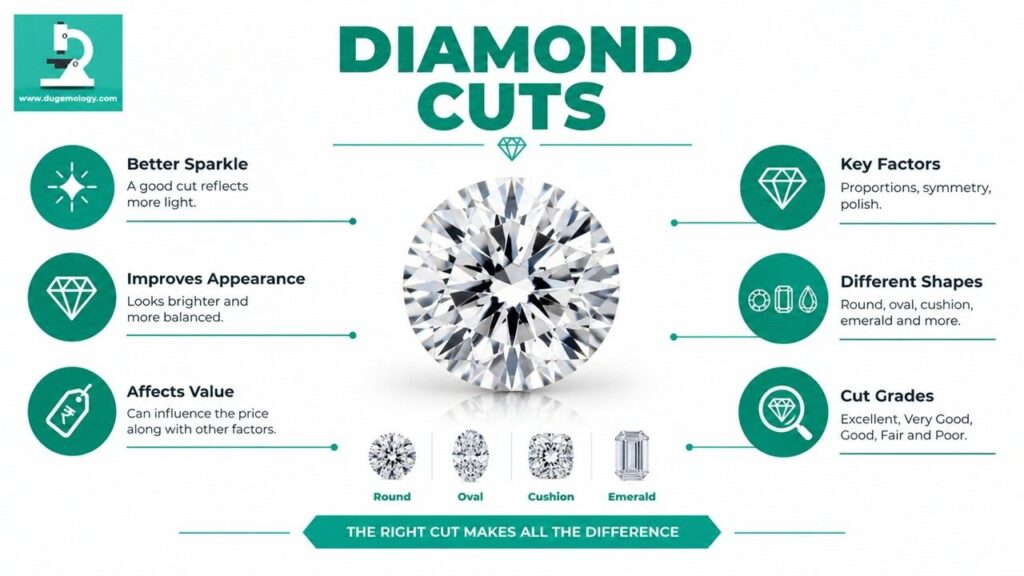
From the classic Round Brilliant to shapes like Oval, Cushion, and Emerald, each diamond has its own identity. In this guide, we discuss different diamond cuts, cut quality, how cut affects sparkle and price, and what to consider before choosing a diamond.
What Is a Diamond Cut?
Diamond cuts describe how a diamond is cut, shaped, polished, and finished. A good cut helps the diamond reflect well.
How Does Diamond Cut Affect Light Performance?
The cut has a major impact on how much sparkle a diamond shows. A well-cut diamond can reflect more light back to your eyes, creating brilliance, fire, and scintillation.
Diamond Cut vs Diamond Shape
Diamond cut and diamond shape are not the same. Cut is about how well the diamond is proportioned and finished, while shape refers to its outline. Round, Oval, Pear, and Emerald are some common diamond shapes.
Diamond Cut vs Diamond Shape: What’s the Difference?
| Diamond Cut | Diamond Shape |
|---|---|
| Describes how a diamond is proportioned, faceted, and polished | Describes the diamond’s outline |
| Strongly affects how the diamond interacts with light | Describes the diamond’s visual form |
| Includes factors such as symmetry, proportions, and polish | Examples include Round, Oval, Pear, and Marquise |
Why Is Diamond Cut Important?
The diamond cuts has a major effect on how a diamond looks. A well-cut diamond can reflect light in a better way, making it appear brighter and attractive.
- Sparkle and brilliance: A good cut helps a diamond reflect more light, giving it a bright and sparkling look.
- Fire and scintillation: Cut also affects the colorful flashes and small flashes of light seen when the diamond moves.
- Overall appearance: A well-cut diamond generally looks more balanced, and bright.
- Diamond value: Cut quality can affect the value of a diamond, along with its carat weight, color, clarity, and shape.
Understanding Diamond Cut Quality
Diamond cut quality tells us how well a diamond has been cut and finished. It has a direct effect on how the diamond reflects light and how much sparkle it shows.
Diamond Cut Grades
For round brilliant diamonds, cut quality is generally given one of these grades:
- Excellent: Reflects light very well and generally looks bright and lively.
- Very Good: Provides good light reflection and sparkle, with a small difference from Excellent.
- Good: Has decent light performance but may not look as bright.
- Fair: Reflects less light and may look duller.
- Poor: Has weak light performance and generally shows less sparkle.
Factors That Affect Diamond Cut Quality
The following features has an important role in diamond cut quality:
- Proportions: How the different parts of the diamond are sized in relation to each other.
- Symmetry: How evenly the diamond’s facets are placed and aligned.
- Polish: How smooth and well-finished the diamond’s surface is.
- Table: The large flat facet at the top of the diamond.
- Depth: The distance from the top of the diamond to the bottom.
- Crown: The upper section between the table and girdle.
- Pavilion: The lower section below the girdle.
Types of Diamond Cuts Based on Shape
People use the term diamond cuts when talking about different diamond shapes. Technically, cut refers to how well a diamond is proportioned, faceted, and polished, while shape refers to its outline. Some popular diamond shapes and cut styles include:
- Round Brilliant Shape
The Round Brilliant Shape is the best choice and is known for its excellent sparkle. Its facets are designed to reflect a lot of light.
- Princess Shape
The Princess Shape has a square or slightly rectangular shape with pointed corners. Its faceting gives it plenty of sparkle and a modern appearance.
- Cushion Shape
The Cushion Shape has a soft square or rectangular shape with rounded corners. It provides a good mix of sparkle and larger flashes of light.
- Oval Shape
The Oval Shape has a long, rounded shape and can provide good sparkle. Its elongated design can also make the diamond look larger.
- Emerald Shape
The Emerald Shape has a rectangular shape with step-like facets. It has less sparkle than a brilliant cut but gives an elegant look.
- Pear Shape
The Pear Shape has one rounded end and one pointed end, giving it a teardrop shape. Its faceting can provide good sparkle and a distinctive appearance.
- Marquise Shape
The Marquise Shape is long and narrow with pointed ends. Its shape can make the diamond look longer and larger while providing a good sparkle.
- Radiant Shape
The Radiant Shape has a square or rectangular shape with cut-off corners. Its brilliant-style faceting gives it a bright appearance.
- Asscher Shape
The Asscher Shape is square with cut-off corners and step-like facets. It has a distinctive geometric look with broad flashes of light.
- Heart Shape
The Heart Shape has a clear heart-shaped outline and brilliant-style faceting. Its unique shape makes it a popular choice for romantic jewellery.
Brilliant Cut vs Step Cut Diamonds
Brilliant cut and step cut are two different ways of arranging the facets of a diamond. Each gives the diamond a different look.
- Brilliant Cut
A brilliant cut is designed to reflect a lot of light. This gives the diamond a bright appearance, with flashes of color when it moves.
- Step Cut
A step cut has long, straight facets that look like steps. It gives the diamond a clean look, with wider flashes of light rather than lots of sparkle. Emerald and Asscher are common examples.
How They Differ in Appearance
The main difference is the way they reflect light. Brilliant cuts usually look more sparkly, while step cuts have a more elegant look with broad flashes of light.
How Diamond Cut Affects Sparkle
The diamond cuts has a big impact on how much sparkle you see. But sparkle is not just about having more facets. The way the facets are shaped, arranged, and angled also affects how the diamond reflects light.
- Brilliance: The bright white light you see coming from the diamond.
- Fire: The flashes of different colors you may see as the diamond is in the light.
- Scintillation: The flashes of light you see when the diamond or light source moves.
A good cut diamond brings these effects together to create a bright and lively appearance.
How to Choose the Right Diamond Cut
Choosing the right diamond cuts is mainly about the look you want, your budget, and your personal style. Here are a few things to consider:
- Your preferred look: Choose a diamond shape and style that you like the most.
- Sparkle: If you want a lot of sparkle, look for a well-cut diamond that reflects light well.
- Ring style: Think about how the diamond will look with the design of your ring.
- Finger shape: Some diamond shapes can make fingers look longer or create a different visual effect.
- Budget: Decide your budget and compare diamonds that fit within it.
- Diamond quality: Consider cut, color, clarity, and carat weight together when comparing diamonds.
- Personal choice: There is no single best diamond cut. The right choice is the one that looks good to you and suits your style.
Which Diamond Cut Has the Most Sparkle?
The Round Brilliant Cut is known for its high level of sparkle. Its facets are designed to reflect a lot of light, giving the diamond a bright and lively look. However, sparkle also depends on the diamond’s proportions, symmetry, and overall cut quality.
Does Diamond Cut Affect Price?
Yes, the diamond cut affects its price. A well-cut diamond may cost more because it generally has better light reflection and appearance.
But cut is not the only parameter that determines price. Carat weight, color, clarity, shape, fluorescence, and market demand can also make a difference.
How to Check the Cut Quality of a Diamond
Before buying a diamond, it is a good idea to check its cut quality. Here are some important things to look at:
- Laboratory report: Check the report for details about the diamond.
- Cut grade: If a cut grade is given, check the grade mentioned in the report.
- Proportions: Check whether the different parts of the diamond are balanced.
- Symmetry: The facets should be properly aligned and placed.
- Polish: A good polish gives the diamond a smooth and clean finish.
- Appearance: Look at how bright the diamond appears.
When you are unsure, a professional laboratory can examine the diamond and provide an independent assessment of its quality.
Frequently Asked Questions(FAQs):-
Q1. Is diamond cut the same as diamond shape?
Ans:- No. Diamond cut and diamond shape are different. Cut refers to how well a diamond is proportioned and finished, while shape refers to its outline, such as Round, Oval, or Pear.
Q2. Which diamond cut has the most sparkle?
Ans:- The Round Brilliant Cut is known for having the most sparkle because its facet arrangement is designed to reflect a high amount of light.
Q3. What is the best diamond cut?
Ans:- There is no single best diamond cut for everyone. The right choice depends on your preferred look, desired sparkle, budget, and the diamond’s overall quality.
Q4. What is an Excellent cut diamond?
Ans:- An Excellent cut diamond has proportions, symmetry, and polish that allow it to reflect light very well, giving it a bright appearance.
Q5. Does diamond cut affect diamond price?
Ans:- Yes. Diamond cut can affect its price, as a well-cut diamond generally shows better light performance and appearance. However, factors like carat weight, color, clarity, shape, and market demand also affect the price.
Q6. Are all diamond shapes graded for cut?
Ans:- No. Not all diamond shapes get a standard cut grade. Cut grading is most commonly given to Round Brilliant diamonds. Other shapes are usually assessed based on their proportions, symmetry, and polish.
Conclusion
Understanding diamond cuts can make it easier to choose the right diamond. Cut affects how well a diamond reflects light, while shape describes its overall outline.
Whether you like a Round, Oval, Cushion, or Emerald diamond, each has a different look. The best choice depends on your style, budget, and the diamond’s overall quality. Always check the laboratory report to make a more informed choice.


