
A natural diamond is a gemstone that forms deep inside the Earth naturally over millions or even billions of years. Every diamond can be different based on its color, clarity, cut, and carat weight, which can affect its appearance and value. With lab grown diamonds becoming more common, many people also want to know what makes a natural diamonds different. In this guide, we’ll discuss how natural diamonds are formed, how they are graded and valued, how they can be identified, and what to know before buying.
Table of Contents
What Is a Natural Diamond?
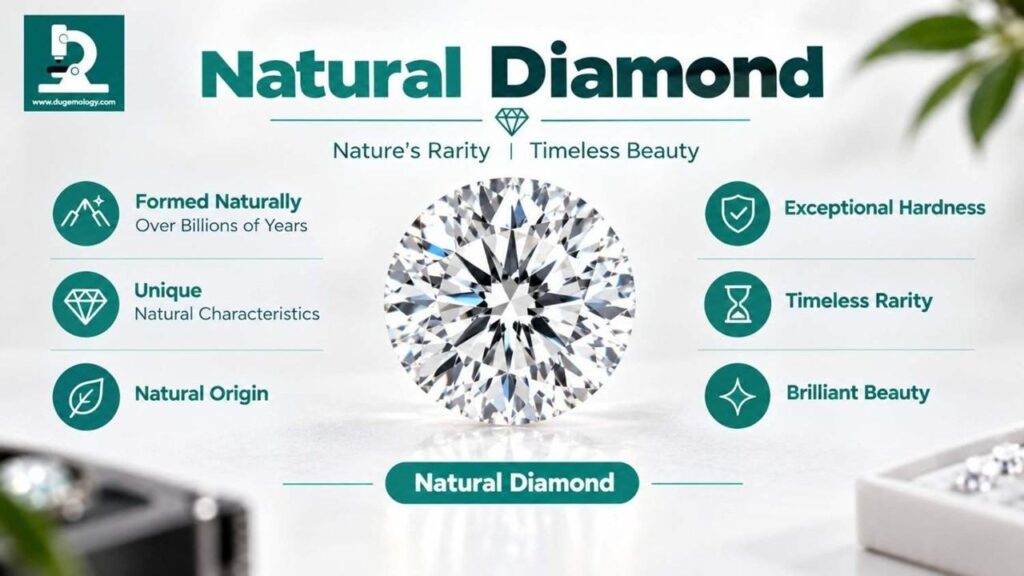
A natural diamond is a diamond that forms naturally deep inside the Earth. It is made of carbon and develops under very high pressure and temperature over millions or even billions of years. These diamonds are brought closer to the Earth’s surface through natural geological processes and are later cut and polished for jewellery. Every natural diamonds is different, with its own color, clarity, cut, and carat weight, which can affect how it looks and how much it is worth.
How Are Natural Diamonds Formed?
Natural diamonds form deep inside the Earth where there is extremely high heat and pressure. Under these conditions, carbon atoms slowly come together and form the crystal structure of a diamond. These diamonds stay deep underground for a very long time before natural geological activity brings them closer to the Earth’s surface.
Where Do Natural Diamonds Form?
Natural diamonds usually form deep in the Earth’s mantle, around 150 to 200 kilometers below the surface. The heat and pressure at this depth create the conditions needed for diamond formation. The exact conditions can vary, which is why natural diamonds can have different colors, clarity, and other characteristics.
How Do Natural Diamonds Reach the Earth’s Surface?
Natural diamonds are brought to the surface through rare volcanic eruptions. These eruptions can carry rocks from deep inside the Earth toward the surface. The diamond-bearing rocks are mainly known as kimberlite and, in some areas, lamproite. Once these rocks are found and mined, the rough diamonds can be recovered, cut, and polished to make jewellery.
How Long Does It Take for a Natural Diamond to Form?
Natural diamonds take a very long time to form. Many of them are more than one billion years old, and some are even older.
What Makes Natural Diamonds Unique?
Every natural diamonds is a little different because it forms naturally deep inside the Earth. The conditions during its formation can affect its appearance, color, clarity, and the features found inside the stone.
Natural Diamonds Characteristics
A natural diamond is known for its hardness, durability, and ability to reflect light. However, diamonds can look very different from one another. Factors such as cut, color, clarity, and carat weight all affect how a diamond looks and how it is evaluated.
Inclusions and Internal Features
Many natural diamonds have features inside them called inclusions. These may be small crystals, clouds, feathers, or other natural features that formed while the diamond was growing. Some are difficult to see, while others can be noticed under magnification. Gemologists examine these features when identifying and grading a diamond.
Natural Diamonds Color and Clarity
Natural diamonds can range from colorless to diamonds with yellow or brown tones. Some can also occur in natural colors such as blue, pink, green, and yellow. Clarity describes the internal and surface features found in a diamond and how easily they can be seen. Both color and clarity are important factors when evaluating the appearance and quality of a natural diamond.
Are Natural Diamonds Rare?
Natural diamonds form deep inside the Earth under special conditions, so their formation is a very rare natural process. However, not every natural diamond is equally rare. Rarity depends on factors such as size, color, clarity, and quality. For example, natural diamonds in colors like pink, blue, or green are much less common than most colorless diamonds. So, the rarity of a natural diamond depends on its individual characteristics.
Natural Diamond vs Lab Grown Diamond
A natural diamonds forms deep inside the Earth naturally over millions or even billions of years, while a lab-grown diamond is created in a laboratory using modern technology. Both are made of carbon and have the same basic crystal structure, so they can look very similar. You usually cannot tell the difference just by looking at them. Special gemological testing may be needed to find out whether a diamond is natural or lab-grown. The main difference is simple — a natural diamond comes from the Earth, while a lab-grown diamond is grown in a laboratory.
How Are Natural Diamonds Graded?
Natural diamonds are graded by looking at different qualities that affect their appearance and overall characteristics. The most commonly used system is the 4Cs — Cut, Color, Clarity, and Carat Weight. These factors help describe a diamond in a clear and consistent way and are important when comparing different diamonds.
The 4Cs of Natural Diamonds
The 4Cs are the four main factors used to describe and grade a diamond:
- Cut: Describes how well the diamond has been cut and how it interacts with light.
- Color: Measures how much color a diamond shows, especially in the near-colorless range.
- Clarity: Looks at the internal and surface features found in the diamond.
- Carat Weight: Refers to the weight of the diamond, not its size.
What Is a Natural Diamond Grading Report?
A natural diamonds grading report is a document that describes the diamond’s characteristics based on a professional gemological examination. It usually includes details such as the 4Cs, measurements, proportions, and other identifying features. A grading report can help buyers and sellers understand what they are dealing with and compare diamonds more easily.
What Determines the Value of a Natural Diamond?
The value of a natural diamond depends on more than just its size. Factors such as cut, color, clarity, carat weight, shape, and overall quality can all affect its value. The diamond’s grading report and current market demand can also play a role.
Factors That Affect Natural Diamond Value
Beyond the 4Cs, value is also affected by shape, fluorescence, proportions, and inclusions — plus current market demand
Why Two Natural Diamonds Can Have Different Prices
Two natural diamonds can have the same carat weight but different prices. Even diamonds with similar 4Cs can vary in cut quality, shape, appearance, inclusions, and other characteristics. This is why carat weight alone does not tell you how much a diamond is worth.
Natural Diamond Certification
A natural diamond grading report gives you useful information about a diamond and its quality. It can help you understand the stone better when buying or selling a diamond and gives you a record of its main characteristics.
Natural Diamond Testing and Identification
It is not always easy to tell if a diamond is natural just by looking at it. A natural diamond and a lab-grown diamond can look very similar to the naked eye. To know where a diamond comes from, gemologists use different tools and testing methods.
Can a Natural Diamond Be Identified With the Naked Eye?
Usually, no. You cannot reliably tell whether a diamond is natural or lab-grown just by looking at it. Both can have similar sparkle, color, and appearance. A trained gemologist may notice some clues, but proper testing is often needed to confirm the diamond’s origin.
Role of a Loupe and Microscope
A 10× loupe is a simple tool used to look closely at a diamond’s inclusions and surface features. A gemological microscope gives a much clearer and more detailed view. These tools help gemologists examine the features inside a diamond and look for clues about how it formed.
When Is Advanced Testing Required?
Sometimes a closer examination is not enough to identify a diamond. In such cases, advanced testing equipment can be used to study the diamond’s growth patterns and other features. Professional gemological testing can help determine whether the stone is a natural diamond or a lab-grown diamond with greater confidence.
Natural Diamonds and Sustainability
A natural diamond goes through several steps before it becomes part of a piece of jewellery. It is mined from the Earth, then sorted, cut, polished, and finally used in jewellery. Each step can have an impact on the environment and the people involved, so responsible practices are important in the diamond industry.
How Are Natural Diamonds Sourced?
Natural diamonds are found in rocks deep inside the Earth. Mining companies use different methods to recover these diamond-bearing rocks, depending on where the diamonds are found. After the rough diamonds are recovered, they are sorted and sent for cutting and polishing before they are used in jewellery.
Environmental and Industry Considerations
Diamond mining can affect the land, water, energy use, and surrounding environment. The impact can vary depending on the location, mining method, and practices followed. The diamond industry also works with different standards and responsible sourcing practices to address these concerns. For buyers, knowing where a natural diamond comes from and having proper documentation can provide more information about its journey from the mine to the market.
Natural Diamonds in Jewellery
Natural diamonds are used in many types of jewellery, such as rings, earrings, pendants, and necklaces. The look of a diamond can change depending on its cut, color, clarity, and carat weight. So, choosing the right diamond often comes down to your jewellery design, personal style, and budget.
Natural Diamonds for Engagement Rings
A natural diamond is a popular choice for engagement rings because it is durable and has a timeless look. Different shapes, such as round, oval, cushion, and princess, can give the ring a different appearance. The right choice depends on your personal style and the design of the ring.
Choosing a Natural Diamond for Jewellery
When choosing a natural diamond, it is helpful to understand the 4Cs — Cut, Color, Clarity, and Carat Weight. The diamond’s shape, the jewellery design, and your personal preference are also important. A grading report can help you understand the diamond’s main characteristics before you buy it.
What to Check Before Buying a Natural Diamond
Before buying a natural diamond, check its grading report and make sure the details match the diamond. Pay attention to the 4Cs, shape, measurements, and other details mentioned in the report. If you are unsure about the diamond’s origin, quality, or value, getting advice from a qualified gemologist can help you make a more informed choice.
Frequently Asked Questions About Natural Diamond
Q1. What does natural diamond mean?
Ans:- A natural diamond is a diamond that forms naturally deep inside the Earth under high heat and pressure over millions or even billions of years.
Q2. Are natural diamonds real diamonds?
Ans:- Yes. A natural diamond is a real diamond that forms naturally inside the Earth. It has the same basic carbon crystal structure as other diamonds.
Q3. How old are natural diamonds?
Ans:- Most natural diamonds are more than one billion years old, and some formed more than three billion years ago. Their age depends on when and under what conditions they formed deep inside the Earth.
Q4. Are natural diamonds rare?
Ans:- Yes, natural diamonds are formed under rare geological conditions deep inside the Earth. However, their rarity can vary based on factors such as color, size, clarity, and quality. Certain natural colors, such as pink, blue, and green, are especially uncommon.
Q5. Can you tell a natural diamond from a lab-grown diamond?
Ans:- Not reliably by looking at the diamond alone. A natural diamond and a lab-grown diamond can look very similar, so specialized gemological testing is usually needed to determine whether a diamond is natural or lab-grown.
Q6. Are natural diamonds more valuable than lab-grown diamonds?
Ans:- A natural diamond generally has a different market value than a lab-grown diamond because of its natural origin and market demand. The value of either can also vary based on its cut, color, clarity, and carat weight.
Q7. Does every natural diamond have a grading report?
Ans:- No. Not every natural diamond has a grading report. A report is issued when the diamond is submitted to a gemological laboratory for grading and examination.
Q8. Is a diamond grading report the same as a valuation?
Ans:- No. A diamond grading report describes a diamond’s quality and characteristics, while a valuation estimates its monetary value.
Conclusion
A natural diamond forms deep inside the Earth over millions or even billions of years. Every diamond is different, with its own color, clarity, cut, and carat weight. Understanding how natural diamonds are formed, graded, identified, and valued can help you make a better decision when buying, selling, or evaluating a diamond. If you want to know more about a diamond’s quality, identity, or value, professional gemological testing can give you reliable information.


