
A solitaire diamond is a single diamond set as the centre stone of a piece of jewellery, with few or no other stones for attention. It is the first choice for engagement rings, but it also appears in pendants, earrings and bracelets.
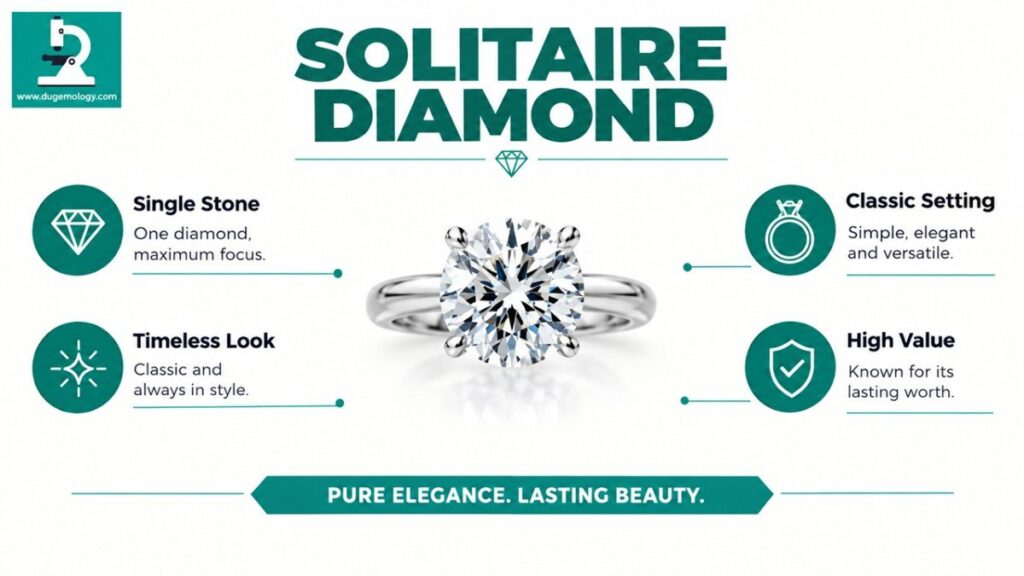
Solitaire is a jewellery style, not a type of diamond. A solitaire can hold a natural or a lab-grown diamond, in any shape, colour grade, clarity grade or carat weight.
In this guide you will learn what a solitaire diamond is, the types and settings available, what it costs in India, how natural and lab-grown solitaires differ, and how to check a solitaire before you pay for it.
What Is a Solitaire Diamond?
A solitaire diamond is one diamond used as the main stone in a ring, pendant, earring or other jewellery piece. The design keeps the focus on that single stone, so its cut, colour, clarity and carat weight matter more than other stone designs.
Key Features of Solitaire Jewellery
- One main diamond: a single centre stone, usually with a plain band.
- Few or no side stones: the diamond is the only real highlight.
- Easy to notice quality: with nothing else to look at, the stone’s cut and clarity show clearly.
- Popular for engagements: the clean, classic look suits both traditional and modern tastes.
- Many shapes and settings: from round brilliant to pear, in prong, bezel, cathedral or tension settings.
Types of Solitaire Diamonds
Solitaires are understood by looking at three things: the setting, the diamond shape and the diamond’s origin.
1. Types of Solitaire by Setting
The setting is the metalwork that holds the diamond. It changes both the look and the protection the stone gets.
| Setting | How It Holds the Diamond | Best For |
|---|---|---|
| Prong | Small metal claws grip the stone and leave most of it visible | Maximum light and sparkle |
| Bezel | A metal rim surrounds the edge of the stone | Active lifestyles, extra protection |
| Cathedral | The band rises in arches toward the stone | A raised, elegant profile |
| Tension | The stone is held by pressure between the two ends of the band | A modern, open look |
The right choice depends on your style, how you will wear the ring and how much protection you want for the diamond.
2. Types of Solitaire by Diamond Shape
Shape is the outline of the diamond. Cut, by contrast, is how well its proportions, symmetry and polish handle light.
- Round brilliant: the most popular choice, designed to return plenty of light.
- Oval: an elongated outline that can look larger from the top.
- Princess: a square or rectangular outline with pointed corners and a modern look.
- Cushion: a square or rectangular shape with rounded corners and a soft, classic feel.
- Emerald: a rectangular, step-cut stone with a clean, open look rather than strong sparkle.
- Pear: one rounded end and one pointed end.
- Marquise: long and narrow with pointed ends, which can make the stone look larger.
- Radiant: a rectangular or square outline with brilliant-style facets.
- Heart: a romantic shape that needs good symmetry to look balanced.
Pick the shape you like, then judge the cut quality of the specific stone.
3. Types of Solitaire by Origin: Natural vs Lab-Grown
The word “solitaire” says nothing about origin. A solitaire can hold either:
- A natural diamond, formed in the Earth over a very long period.
- A lab-grown diamond, produced in a laboratory with advanced technology. It has the same basic diamond composition as a natural one.
How to Choose a Solitaire Diamond: The 4Cs
Because a solitaire has one stone, every quality detail is visible. Look at all four Cs, then at shape and setting.
- Cut: affects how brightly the diamond reflects light. For a solitaire, a good cut makes more visible difference than a higher colour or clarity grade.
- Colour: graded from D (colourless) to Z. Lower grades show more yellow or brown. How much color you can see also depends on shape, size and the metal of the setting.
- Clarity: describes natural features inside (inclusions) and on the surface (blemishes). Higher grades have fewer or less noticeable features.
- Carat: the weight of the diamond, not its size. Two stones of equal carat weight can look different in size because of shape and proportions.
Solitaire Diamond Price in India
There is no fixed price for a solitaire diamond. The price depends on the stone’s carat, cut, colour, clarity, shape and origin, plus the cost of the setting and metal.
What Affects Solitaire Diamond Price?
- Carat weight: larger diamonds generally cost more, but not in direct proportion to weight.
- Cut quality: a well-cut stone reflects light better, which affects value.
- Colour and clarity: higher grades are generally more valuable.
- Shape: different shapes carry different prices depending on demand and how much rough is lost in cutting.
- Natural or lab-grown origin: the two can differ greatly in price because their origins and market values differ.
- Grading report: a report from a recognised laboratory documents what you are buying.
- Fluorescence: can sometimes affect appearance and value.
- Treatments: any treatment must be disclosed and affects how the stone is priced.
- Setting and metal: gold or platinum, and the complexity of the design, add to the final jewellery cost.
- Market conditions: demand, supply and wider industry factors move prices over time.
Is a Solitaire Diamond More Expensive?
Not necessarily. “Solitaire” describes the design, not the value. A solitaire may cost more or less than a multi-stone ring depending on the quality of the centre stone.
Natural vs Lab-Grown Solitaire Diamond
| Base | Natural Solitaire | Lab-Grown Solitaire |
|---|---|---|
| Origin | Formed in the Earth | Produced in a laboratory |
| Composition | Diamond | Same basic diamond composition |
| Price | Generally higher | Generally lower for similar quality |
| How to Confirm Origin | Grading report or lab testing | Grading report or lab testing |
The two cannot be reliably told apart by eye, which is why paperwork and testing matter. Our guide to lab-grown diamonds explains the differences in more depth.
Solitaire vs Other Engagement Ring Styles
| Style | What It Looks Like | Strength | Trade-Off |
|---|---|---|---|
| Solitaire | One centre diamond | Timeless, focus on the stone | Centre stone quality is very visible |
| Halo | Centre stone ringed by small diamonds | More sparkle and apparent size | Busier look, more to maintain |
| Three-Stone | Centre stone with a diamond on each side | Symbolic and balanced | Budget is split across three stones |
If you want one diamond to be the star, a solitaire is the simple, classic choice.
How to Verify a Solitaire Diamond Before You Buy
This is where many buyers go wrong. Follow these steps before paying.
- Ask for a grading report. It lists carat weight, colour, clarity, shape, measurements and other characteristics.
- Verify the report number online, if the issuing laboratory offers verification, to confirm the report is genuine.
- Match the report to the stone. Check carat weight, measurements, shape, colour and clarity against the actual diamond.
- Check the laser inscription. If the diamond is inscribed with the report number, it can be read under magnification.
- Read the origin and treatment details. Confirm whether the stone is natural or lab-grown and whether it has been treated.
- Get it tested if in doubt. A professional gemological laboratory can identify, grade and value a diamond independently.
Want your solitaire checked before you buy?
DU Gemology offers diamond identification, grading and valuation. Book a diamond test.
Can You Buy a Solitaire Setting Without a Diamond?
Yes. Many jewellers sell the ring setting on its own, so you can choose the design first and select the diamond later. This helps if you want to compare stones by shape, carat, colour, clarity and budget. Make sure the setting is made for the shape and size of the diamond you plan to buy.
Can You Change the Diamond in a Solitaire Ring?
Often yes, even to a bigger stone, but it depends on the ring. A jeweller should check:
- Setting design: whether it can hold the new stone.
- Stone size and shape: whether the new diamond fits properly.
- Prongs: whether they are large and strong enough.
- Ring size and structure: whether the whole ring can safely carry the new diamond.
A bigger diamond may need an adjusted or new setting, so have the ring checked first.
Pros and Cons of Solitaire Diamond Jewellery
Advantages
- A classic look that stays in style for years.
- All the attention goes to the centre diamond.
- Clean, simple design.
- Many shape and setting options.
- Easy to personalise by shape, carat, colour, clarity and setting.
Limitations
- The centre stone matters more, since there is nowhere for flaws to hide.
- Chips or scratches on the centre diamond are easier to notice.
- Multi-stone designs can show more overall sparkle.
- It needs careful selection and verification before purchase.
How to Care for a Solitaire Diamond Ring
- Clean it regularly to remove dirt, oil and dust that dull the stone.
- Avoid harsh chemicals that may affect the metal or setting.
- Check the prongs from time to time to make sure the diamond is secure.
- Remove it during risky activities where it could be hit or scratched.
- Store it separately in a box or soft pouch so it does not rub against other jewellery.
- Get it checked by a jeweller if the stone feels loose or the setting looks damaged.
Frequently Asked Questions About Solitaire Diamonds
Q1. What is a solitaire diamond?
Ans:- A solitaire diamond is a single diamond used as the main stone in a piece of jewellery, usually an engagement ring, with few or no other stones.
Q2. Is a solitaire diamond a real diamond?
Ans:- Yes. A solitaire can hold a real natural or lab-grown diamond. “Solitaire” describes the design, not the diamond type.
Q3. Is solitaire a type of diamond?
Ans:- No. Solitaire is a jewellery style where one main stone gets the attention.
Q4. Is a solitaire diamond always natural?
Ans:- No. It can be natural or lab-grown.
Q5. What is the best shape for a solitaire diamond?
Ans:- There is no single best shape. Round, oval, princess, cushion and pear all work well. Choose what suits your style.
Q6. How much does a solitaire diamond cost in India?
Ans:- It depends on carat, cut, colour, clarity, origin and setting.
Q7. Is a solitaire diamond more expensive?
Ans:- Not always. The word “solitaire” does not raise the price. The quality and origin of the stone do.
Q8. Is a solitaire good for an engagement ring?
Ans:- Yes. It is one of the most popular engagement ring styles because it keeps the focus on the centre diamond.
Q9. How do I verify a solitaire diamond?
Ans:- Check its grading report, verify the report number with the issuing laboratory, match the report to the stone and consider independent testing at a gemological lab.
Conclusion
A solitaire diamond is a simple, classic choice where one stone takes centre stage. It can be natural or lab-grown, in many shapes and settings, and the centre stone’s quality shows clearly. Before you buy, consider the 4Cs, shape and setting, set a budget using realistic price ranges, and verify the grading report against the actual stone. If you want an independent opinion, get your diamond tested at DU Gemology.


